Connect with us

Films

Nosferatu (2024)

Yes, there are some solid gothic visuals. Yes, Willem Dafoe is fun. But those things don’t make up for a film that’s so self-indulgent that it forgets to be entertaining.

Published

on

Nosferatu

Let’s be real: when you hear the name Nosferatu, you expect a certain level of eerie, gothic horror. You expect shadowy alleyways, haunting silence, and the slow, dreadful realization that something ancient and evil is creeping toward you. What you don’t expect is a bloated, overly self-serious art piece that stretches itself so thin you can practically see through it.

And yet, here we are.

Robert Eggers’ Nosferatu is what happens when a filmmaker is so focused on making a “serious” horror masterpiece that they forget to actually make it scary. Or engaging. Or, in some cases, even coherent. Sure, the film hits a few of the familiar beats of Dracula—because at the end of the day, that’s all Nosferatu really is, a bootleg Dracula with the serial numbers filed off—but it stretches itself over such a plodding runtime that it loses any real impact.

The result? A film that thinks it’s profound, but is actually just pretentious.

Let’s start with the title character himself: Count Orlok. Played by Bill Skarsgård, who has proven himself more than capable of being a terrifying horror villain (IT, Barbarian), Orlok in this version isn’t so much terrifying as he is just… weird.

First of all, that damn moustache. Who in the production department thought Nosferatu, one of the most unsettling vampire designs in cinematic history, should have facial hair? This isn’t The Grand Budapest Hotel, and Orlok isn’t some quirky Wes Anderson side character—he’s supposed to be an unholy thing, not the guy running the front desk at an Eastern European hotel in 1912. It’s genuinely baffling, because every time Orlok is on screen, instead of feeling dread, all you can think is, Why does he look like an evil landlord?

Aside from his questionable grooming choices, Orlok just isn’t that scary. He’s certainly grotesque, and Skarsgård does his best to channel something monstrous, but his version of the character often just comes off as a guy standing ominously in doorways. It’s less otherworldly terror and more your socially awkward coworker who doesn’t blink enough.

Then there’s Lily-Rose Depp as Ellen (the film’s stand-in for Mina Harker). Look, Depp is clearly trying here. She’s throwing herself into this role with everything she’s got, but the way the film frames her makes her come across less as a tragic gothic heroine and more like a freak (and not in the fun, Tim Burton way).

The movie can’t seem to decide whether she’s supposed to be innocent, tormented, possessed, or just plain unwell. Sometimes, she’s staring blankly into space like she’s in a perfume ad. Other times, she’s writhing in ways that suggest she might be in a different kind of horror film. If her performance seems confused, it’s because the script does her no favors. A stronger script might have given her more to work with, but as it stands, she spends most of the movie alternating between looking bewildered and looking like she’s trying to seduce Orlok for some reason.

And speaking of terrible character decisions…

Can we, as a society, please stop butchering Mina’s role in Dracula adaptations? Please?

Once again, we get a version of Dracula (Nosferatu, same thing) where Mina—sorry, Ellen—doesn’t get to be the intelligent, determined woman who outwits the vampire. No, no, that would be too much effort. Instead, the writers decide the best way to “empower” her character is to make her sacrifice herself to stop Orlok.

Why? Because horror movies still can’t grasp the idea that women in gothic horror stories don’t always have to die for the sake of emotional weight. The original Nosferatu did this too, so it’s not like this is new, but it’s still bullshit. It was bullshit in 1922, and it’s even more bullshit now.

The worst part? The way the movie frames her death as this grand, tragic moment, as if it’s some kind of profound statement. It’s not. It’s just lazy writing disguised as gothic storytelling.

Willem Dafoe, bless his unhinged little heart, seems to be the only person in this movie who realizes what kind of film he’s in. While the rest of the cast is drowning in self-seriousness, Dafoe is over here treating every line like he’s in a campy stage play, and honestly? It’s the best part of the movie.

Dafoe is always at his best when he’s allowed to lean into the absurd, and here, he takes that opportunity and runs with it. Every moment he’s on screen, you can feel the energy shift—suddenly, the film has life, because he refuses to let it wallow in its own misery. The downside? Every scene without Dafoe feels twice as slow by comparison.

Now, let’s talk about the changes this film makes to the classic Nosferatu/Dracula structure. Some of them could have been interesting, but instead, they feel completely arbitrary.

Jonathan Harker (or Hutter, or whatever they want to call him in this version) is barely relevant. He exists, sure, but you could remove him entirely, and nothing about the story would change. He’s that pointless.

Orlok’s motivations are vague at best. Why is he doing what he’s doing? What does he actually want? Unclear. He just sort of exists to be creepy and torment Ellen.

The pacing is horrendous. The movie stretches itself out like it’s some slow-burn masterpiece, but it never earns that level of indulgence. Every scene lingers too long, every conversation takes twice as long as it should, and by the time anything interesting happens, you’re already mentally checked out.

At the end of the day, Nosferatu (2024) is a film that tries way too hard to be an artistic masterpiece but forgets that Nosferatu is, first and foremost, supposed to be scary. The horror is watered down, the pacing is sluggish, and the performances are a mixed bag of trying too hard and not trying hard enough.

Yes, there are some solid gothic visuals. Yes, Willem Dafoe is fun. But those things don’t make up for a film that’s so self-indulgent that it forgets to be entertaining.
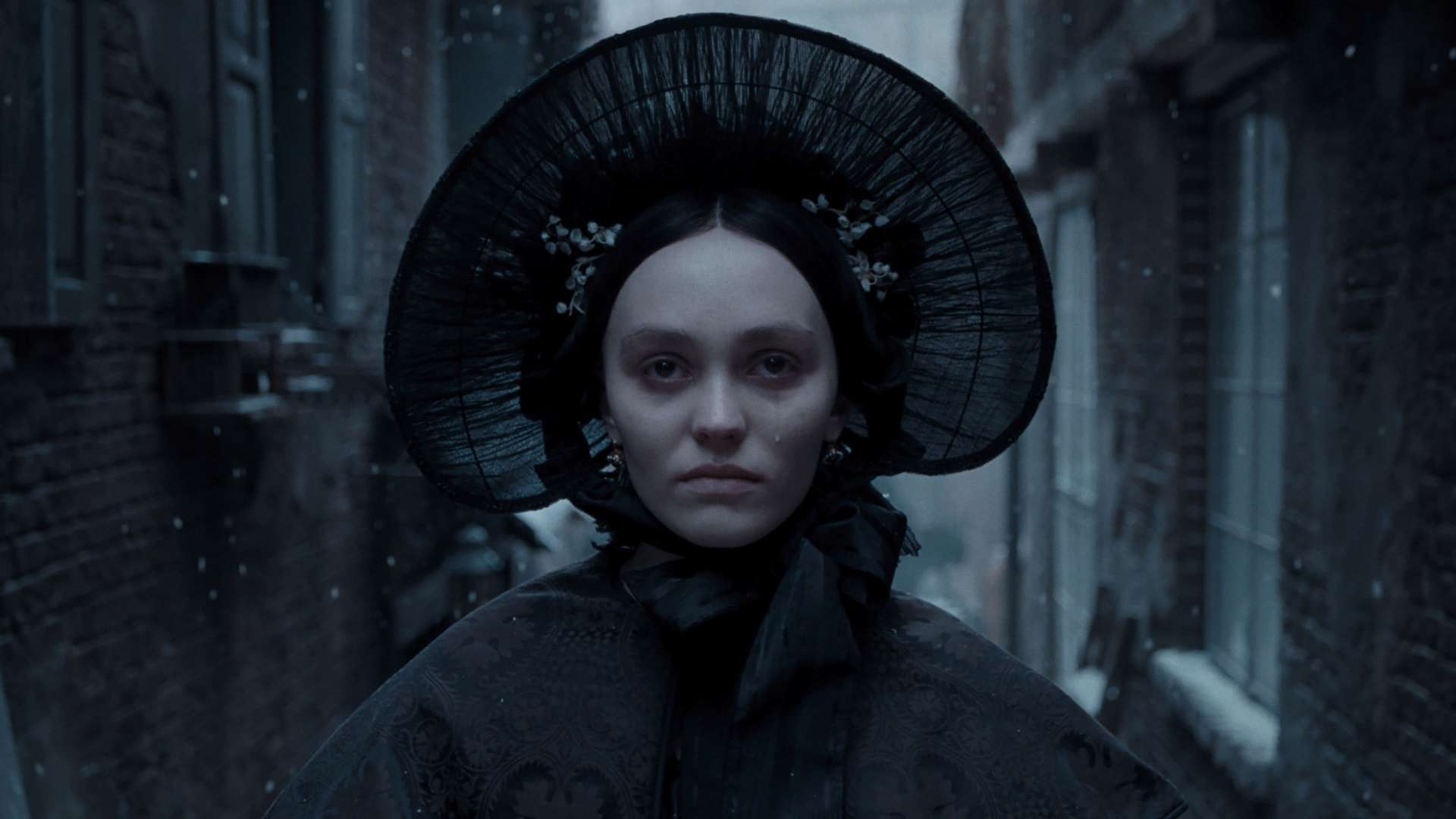
And that damn moustache. I will never forgive them for that damn moustache.

Nosferatu
1 ScreenDim Score
Summary
Yes, there are some solid gothic visuals. Yes, Willem Dafoe is fun. But those things don’t make up for a film that’s so self-indulgent that it forgets to be entertaining.
Continue Reading
Click to comment

Leave a Reply

Your email address will not be published. Required fields are marked *

Films

Obsession (2026)

It’s a very old joke told exceptionally well by someone who understood (correctly) that the joke was always secretly a horror story.

Published

on

Obsession

We’ve all done it. Some idle Tuesday, midway through your third scroll past a photograph of someone who is never, ever going to love you, you’ll have caught yourself thinking: but what if they just… did? What if the universe, in a rare fit of generosity, simply reached down and rewired another human being’s heart so that it beat — helplessly, permanently — for you? It’s a lovely little fantasy. It lasts about four seconds, until your conscience turns up like a disappointed PE teacher. And it is, once you’ve stripped the wallpaper off, quite possibly the single most horrifying thing a person can wish for. Which is precisely the wallpaper Curry Barker has stripped, with enormous relish, in Obsession.

Here is the pitch, and I’d like you to notice how ancient it is. Lonely lad fancies girl. Lonely lad acquires cursed novelty tat — here a “One Wish Willow”, which is essentially a monkey’s paw that’s been to a farmers’ market — and wishes that girl would love him more than anyone else alive. Girl duly does. That’s it. That’s the monkey’s paw: the oldest, mouldiest, most-thumbed premise in the entire horror cupboard, the one W.W. Jacobs coughed up in 1902 and which everyone from Tales from the Crypt to The Simpsons has been quietly reheating ever since. If you have ever owned a television, you have seen this story roughly nine hundred times. There is nothing new here. Nothing.

…and yet.

What Barker grasps — and what the old portmanteau spook-shows never quite allowed themselves to — is that the monkey’s paw was always more upsetting than Creepshow or Tales from the Crypt were willing to let it be. Those were morality tales delivered with a wink: a greedy toff gets his comeuppance, the Crypt Keeper cackles, roll credits, everyone’s home in time for cocoa. Obsession declines the wink. It takes the identical setup and then simply refuses to look away, following the wish clean past its ironic punchline and into genuinely distressing country, where “she loves you now” curdles into something nearer to a hostage situation. Nikki (played by Inde Navarrette, who is frankly doing more acting than the budget strictly paid for) flickers between adoring Stepford girlfriend and something with far too many teeth, and the film’s real horror isn’t the violence. It’s the ghastly logic of a person whose entire self has been overwritten to want you. It’s the ex who won’t leave, who keys your car, dialled up to cosmic.

And yeah, it’s funny. You’ll laugh, you’ll feel faintly weird about laughing, and here’s the reassuring part: that’s entirely the point. Barker is a sketch comedian by trade — one half of a YouTube double act, which is apparently now a legitimate route to a feature deal, God help us all — and the humour is deliberate to the last twitch. It’s the awful little comedy of a man too polite and too quietly pleased with himself to undo the catastrophe he’s personally ordered, fussing about the edges of a nightmare he technically requested at the till. It’s the specific cringe of watching someone receive exactly what they asked for and slowly realise they now have to live inside it. Think less “jump scare”, more “watching a mate dig himself into a hole at a party while you’re powerless to intervene”. The laughs and the dread aren’t fighting each other. They’re the same muscle.

The genuinely staggering bit, the thing destined for the trivia bins for years, is that this entire nasty little marvel was assembled for roughly the price of a mid-range hatchback, under a million dollars, and has since gone and made several hundred million. Because the ticket-buying public have finally twigged that they’d rather watch one good idea executed with conviction than the ninth sequel to something with a colon in the title (ARE YOU LISTENING, HOLLYWOOD?). Between this and the whole Backrooms racket, we appear to be living through the year that cinema remembered “cheap and confident” comprehensively beats “expensive and frightened”.

Is it a masterpiece? Nah, of course not. It’s a very old joke told exceptionally well by someone who understood (correctly) that the joke was always secretly a horror story. It sags in the middle, where the lad’s passivity tips over from “characterisation” into “why are you still just standing there, you berk”, and if you march in demanding novelty you’ll trudge out grumbling, because the bones of this thing are older than your nan. But go in wanting a lean, mean, genuinely horrible little cautionary tale, propped up by a properly unnerving central performance and a nasty streak of comedy, and you’ll have a grand old time feeling appalled.

Recommended — just don’t go to watch it with your crush. Awkward.

Obsession (2026)
4 ScreenDim Score

Continue Reading

Films

Backrooms (2026)

Know the lore and there’s plenty to chew on. Don’t, and you’ll spend the best part of two hours watching a man being let down by a wall.

Published

on

Backrooms

Have you ever been stuck in an office waiting room, or a job centre, or literally any furniture shop after 4pm on a wet Tuesday? You’ll know it when you think of a fluorescent bulb buzzing its own death rattle above your head, carpet the colour of pus, a hum you can’t place, and the slow but certain realisation that, yes, you’ve been here before, you’ve always been here, and nobody—nobody—is coming to collect you.

If that’s you, congratulations, you have experienced the Backrooms and I’ve just saved you twelve quid and a tepid cinema hot dog.

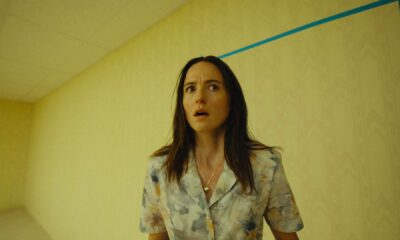
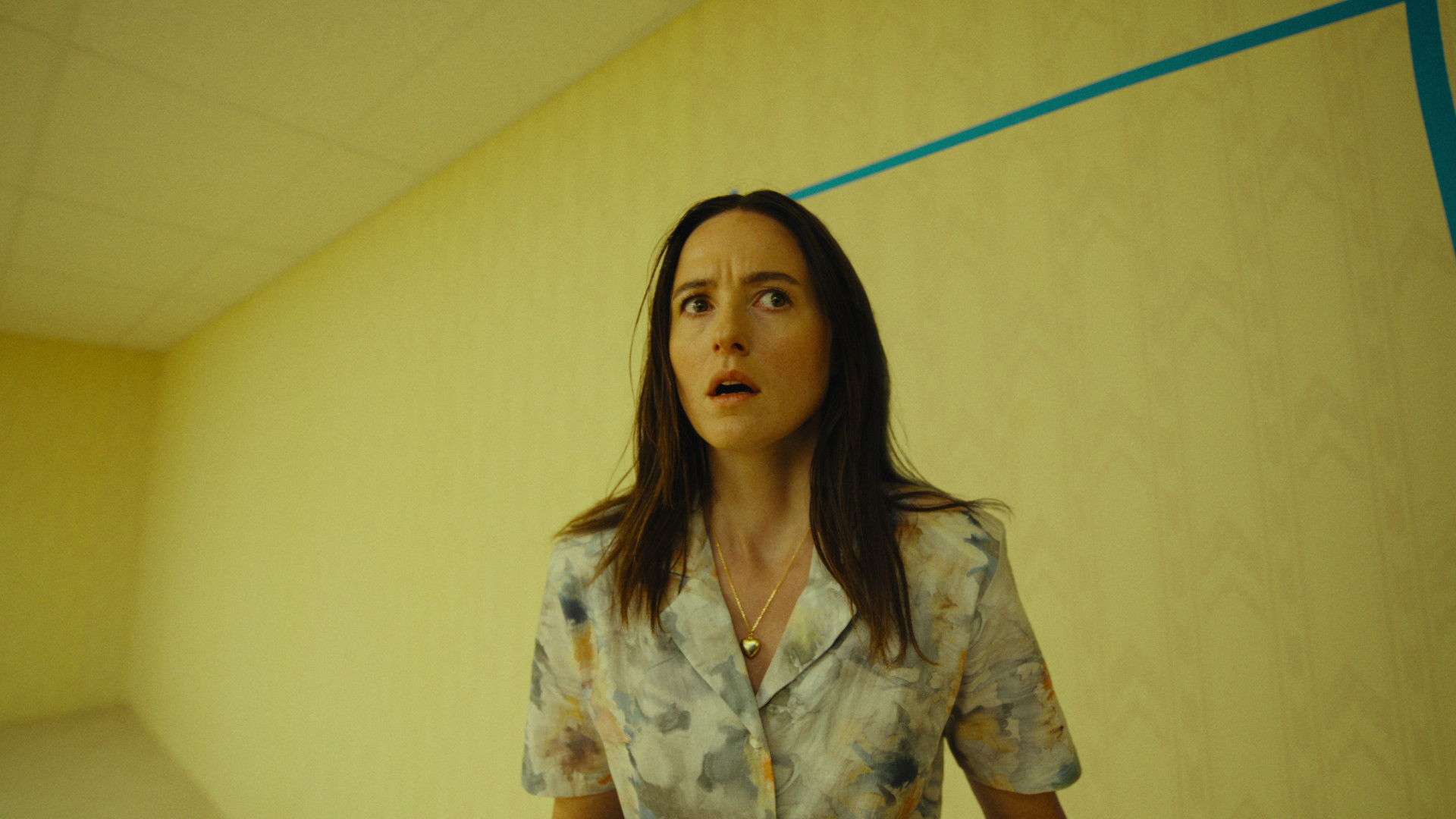
Because that is, essentially, the film. Backrooms, the movie, is 110 minutes of exactly that sensation, projected at you as a screen-size rectangle of piss yellow. Whether you walk out of the cinema stunned or in shambles depends on exactly one variable: how much homework did you do beforehand?

Here’s the thing—this is a gatekept film. It’s got at least a decade of internet mythology behind it. There are wiki entries, YouTube videos (ironically, where the director started) and endless fan-lore about “noclipping” out of reality and wandering through levels like a haunted IKEA. This film assumes you’ve already absorbed all of it. If you have, the film hums along on a frequency only you can hear. The damp corridors and sputtering lights are a little dog-whistle of recognition and you sit there, nodding like a berk, going “ah, yes, of course” while the uninitiated side-eye you like you’re speaking in tongues.

I only know this because I was that nodding berk. I’ve spent enough time on the internet to know the lore, so I sat in the dark feeling very smug and included. My partner, meanwhile, whom I had foolishly dragged along on the promise of “a scary one” spent the full one hour fifty minutes in a state of building bafflement. At about ninety minutes, she leaned over and ask, “is this it?” — that’s the review. That’s the whole film in three words, delivered by a lovely lady who was promised a monster and received a corridor.

And it IS a corridor, and endless one. The direction is competent enough—more than competent, really, I see why Kane Parsons is getting his reputation. There’s a genuine eye for the specific dread of empty office space, like a 1994 insurance firm from which every human has been quietly raptured mid-photocopy. The acting is fine. The story is there, technically, doing its best under the circumstances, though story is a generous word for what is largely a person walking toward a door and then reconsidering. It’s confusing in patches, but upon that there is a point of mercy—it’s not a fault. The confusion is the whole point. Complaining that Backrooms is disorienting is like complaining a swimming pool is damp. That’s what you’re paying for.

The monsters, when they finally decide to enter the shot, are perfectly acceptable. Nicely designed, nicely rendered, the sort of thing that would have you soiling your beanbag at fourteen. They even got the bloke from Alien: Romulus to portray one of them, which makes sense since the bloke is the size of a doorframe. But, and I stress this point, the film is not scary. It’s eerie, sure, it’s unsettling in the way a long, unexplained train journey is unsettling. But scares need rhythm, contrast, and Backrooms has committed so completely to its single droning note that by the time anything lurches out of the wallpaper you’re too hypnotised by the skirting board to flinch. It’s horror as ambient noise.

That brings us nicely to the real problem—one that isn’t the film’s fault at all—and it really annoys me that this review sits back-to-back with Sinners. The hype. Somewhere along the line the internet decided this was the next generational event, like a Citizen Kane of liminal dread, and so audiences are now trooping in expecting to have their skulls rearranged and then trooping out muttering “well, it was alright, I suppose” which is the single saddest sentence in the human language. Because it is alright, it’s fine. It would’ve made a fantastic season of Channel Zero. But it’s a perfectly serviceable, occasionally beautiful film about being lost in a building (and losing yourself) and it never once asked to be a masterpiece. We simply decided it had to be one and then took the hump when it turned out to be a solid seven.

So in conclusion, know the lore and there’s plenty to chew on. Don’t, and you’ll spend the best part of two hours watching a man being let down by a wall, which, now I think about it, is exactly what my wife was doing.

Overall, meh. But a really handsomely photographed meh.

Backrooms
4 ScreenDim Score

Continue Reading

Films

Sinners (2025)

It’s fine, I suppose, but I don’t understand why everyone’s acting like it’s the greatest thing since sliced bread when it’s really more like adequately buttered toast.

Published

on

Sinners (2025)

Sinners is a perfectly adequate film – but that’s it, adequate.

It’s not completely shit. The acting is perfectly fine – nobody embarrasses themselves, nobody phones it in. Michael B. Jordan does his thing, everyone else does their thing, and things generally get done adequately. The music is surprisingly decent too, which is more than you can say for most films these days, where the soundtrack sounds like it was composed by someone having a nervous breakdown in a synthesiser shop.

But bloody hell, this thing is about 30 minutes too long. Maybe more. It’s like watching someone tell a perfectly good joke and then spend another half hour explaining why it was funny, complete with PowerPoint slides and audience participation segments.

You can feel where a decent 90-minute film is trying to escape from the bloated 2-hour monster it’s been trapped inside. The first 45 minutes is all set-up. Every scene goes on just a bit too long, every conversation includes about three more exchanges than necessary, and by the end you’re checking your watch wondering if time has actually stopped moving.

But there were three things in particular that bugged me about this film.

First up, we’ve got the classic “one person does something monumentally stupid that puts everyone at risk” scenario. In this case, someone invites the vampires in, because apparently nobody in this film has ever seen a vampire movie before. It’s like watching someone stick their hand in a blender and then acting surprised when it doesn’t end well.

Then there’s the antagonist, who spends precious time delivering what amounts to a TED talk about his evil plans instead of just getting on with the evil bit. Look mate, we get it, you’re the bad guy, you’ve got motivations and backstory and probably daddy issues. Just get on with the murdering, yeah? The monologuing thing stopped being clever sometime around the first Austin Powers film.

But here’s the really mental bit – even without all the villainous chat, the plan still makes no bloody sense. He’s going to burn anyway? What was the strategy there exactly? Stand around explaining things until sunrise? It’s like watching someone play chess by explaining their moves to their opponent for twenty minutes before actually making them.

The whole thing follows the “everyone gets laid and dies” formula with the reliability of a Swiss watch. You can practically tick them off: character development, bit of romance, sexy times, immediate death. It’s so predictable you could set your calendar by it.

The setting and costumes are fine enough – period pieces generally look good because someone’s put effort into making sure the buttons are historically accurate and the dirt is appropriately distributed. But looking nice isn’t the same as being interesting, which seems to be something this film hasn’t quite grasped.

What’s most frustrating is that there’s clearly a decent film buried somewhere in this overstretched mess. Strip away the padding, tighten up the pacing, maybe don’t have your villain explain his entire life story before getting down to business, and you might have something actually worth watching.

Instead, we get a film that’s been hyped to the bloody moon by people who seem to think “adequate” is the new “brilliant.” Everyone’s acting like this is some kind of game-changing masterpiece, when it’s really just a perfectly serviceable vampire film that’s been inflated like a balloon at a children’s party.

The hype is the real problem here. When everyone’s telling you something is revolutionary cinema, you go in expecting your socks to be knocked clean off. Instead, your socks remain firmly in place, possibly even more securely attached than when you started.

Look, if you go in with properly managed expectations – thinking you’re going to see a decent enough vampire film with good production values and competent performances – you’ll probably have a perfectly acceptable time. If you go in expecting the sort of groundbreaking cinema everyone’s been promising, you’re going to come out wondering what all the fuss was about.

It’s fine, I suppose, but I don’t understand why everyone’s acting like it’s the greatest thing since sliced bread when it’s really more like adequately buttered toast.

Sinners (2025)
3.5 ScreenDim Score

Continue Reading

Trending